Industrial electrical services cover the design, installation, testing, maintenance, and modernization of the power and control systems that keep factories, warehouses, utilities, and processing plants running. Instead of focusing on a single panel or machine, these services view the entire ecosystem—utility feeds, switchgear, distribution, controls, and field devices—as one interdependent whole. When the system is designed and maintained as a whole, downtime shrinks, safety improves, and energy use becomes more predictable. In competitive markets, that reliability becomes a strategic advantage, not just a maintenance line item.
Defining Industrial Electrical Services for Modern Operations
At the simplest level, an industrial electrician ensures safe, reliable power distribution and control—from the utility transformer to the smallest sensor. In practice, that means proper conductor sizing, selective coordination of breakers, clean terminations, environmental protection, and documentation you can trust. Because production doesn’t pause for guesswork, good service emphasizes standards, traceability, and repeatable procedures that make troubleshooting faster and audits smoother.
Why Industrial Electrical Services Safeguard People, Assets, and Uptime
Industrial environments combine high energy, moving equipment, and complex processes. A disciplined approach to power and controls mitigates hazards before they appear. Properly engineered systems reduce arc flash risk, eliminate nuisance trips, and keep protective devices coordinated so the smallest fault isolates quickly. Safety isn’t an add-on; it is baked into design choices, maintenance intervals, and operator workflows that keep people protected while assets produce at plan.
Core Industrial Electrical Services You Can Expect
A comprehensive provider handles both heavy power and precision control. That blend supports everything from commissioning a new line to diagnosing an elusive intermittent fault. The goal is stable equipment, predictable throughput, and clean handoffs across shifts.
Power Distribution and Switchgear
From utility service to MCCs and subpanels, correct device selection and coordination prevent cascading trips and overheating.
Motor Controls and Drives
Properly applied starters, VFDs, and soft starters protect motors, reduce inrush, and tune speed for process quality and energy savings.
Instrumentation and Controls
Reliable signals from transmitters and PLC I/O keep loops steady, enabling better quality, yield, and batch repeatability.
Hazardous Locations
Correct equipment ratings and installation methods prevent ignition sources where flammable gases or dust may be present.
Industrial Electrical Services for Compliance and Risk Management
Regulatory pressure is increasing, and insurers expect proof of diligence. Structured programs turn compliance from a scramble into a system. Documentation, labeling, and tested procedures
help your team act correctly when it matters and demonstrate control to auditors, customers, and carriers.
Arc Flash Studies and Labeling
Up-to-date incident energy analysis, PPE categories, and clear labels guide safe work practices at every enclosure.
NFPA 70E and LOTO Integration
Training, boundaries, and lockout/tagout procedures align field work with policy, ensuring a safe transition from binder to floor.
Change Management and Records
Drawings, panel schedules, and revision logs keep truth current, aiding investigations and speeding future modifications.
How Industrial Electrical Services Reduce Downtime and Cost
Unplanned stops are expensive in scrap, labor, and missed orders. A preventive and predictive approach—tightening terminations, thermography, vibration and insulation testing, and reviewing historian trends—finds weak signals before failure. Standardized spares and documented settings shorten recovery when a device does fail. Over time, fewer emergencies mean a calmer plant, lower overtime, and a maintenance budget that can be planned rather than defended.
Industrial Electrical Services that Optimize Energy and Power Quality
Quality power extends equipment life and cuts bills. Services that look beyond kWh into power factor, harmonics, and demand windows can deliver savings without compromising production. Clean sine waves and balanced loads reduce nuisance trips, heat, and early equipment retirement.
Power Factor Correction
Properly sized capacitors or active systems lower utility penalties and free capacity for growth.
Harmonic Mitigation
Line reactors, filters, and drive settings tame distortion that overheats transformers and confuses sensitive electronics.
Demand and Load Shaping
Sequencing large loads and scheduling noncritical tasks off-peak flattens demand spikes and reduces utility charges.
Scaling With Growth: Industrial Electrical Services for Expansions and Retrofits
As product mixes evolve, lines reconfigure, and demand shifts. A strong partner helps you integrate new equipment, add feeders, or reroute conduit with minimal disruption. Early load studies and layout planning prevent last-minute panel crowding or cable runs that complicate maintenance. The result is a capacity that grows in clean increments rather than a maze of temporary fixes that become permanent.
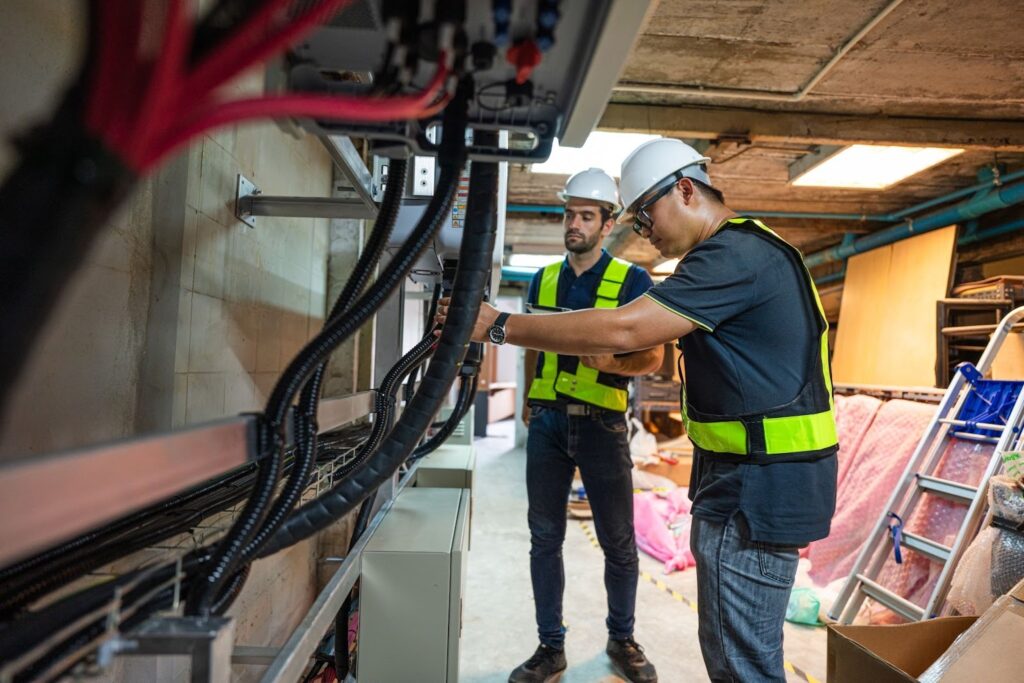
Digital Integration in Industrial Electrical Services
Electrical systems now speak the same language as operations technology. Integrating meters, breakers, and drives into SCADA and analytics provides real-time visibility of energy use, trip history, and asset health. With that data, teams prioritize work orders by risk, tie alarms to action, and measure the impact of changes. Digitalization doesn’t replace fundamentals; it makes them faster and more precise.
Choosing a Partner for Industrial Electrical Services
A good partner brings design rigor, field discipline, and a safety-first culture. Look for transparent scopes, precise drawings, and technicians who document torque values and test results. Ask how the team handles permits, inspections, and commissioning, and whether they
provide training so your operators and maintenance staff can sustain gains after turnover.
Credentials and Coverage
Licensing, insurance, manufacturer certifications, and experience in your industry reduce risk and speed approvals.
Safety Culture You Can See
JSA use, PPE compliance, and clean, labeled work areas signal habits that protect people and ensure timely scheduling.
Lifecycle Support
From design-build to 24/7 emergency response, a cradle-to-grave offering keeps systems consistent and support simple.
Where Industrial Electrical Services Deliver Measurable ROI
Return shows up in OEE, scrap rates, energy intensity per unit, and fewer unplanned calls. Softer benefits matter too: easier training, cleaner audits, and calmer changeovers. When projects are tied to KPIs at the start—fewer breaker trips, faster start-up, lower peak demand—progress becomes visible, which sustains investment and team buy-in.
Getting Started With Industrial Electrical Services Today
Start with a short assessment of your highest-risk or highest-cost area. Gather one-line diagrams, utility bills, and recent downtime logs. From there, a prioritized plan might include arc flash updates, thermography, selective coordination adjustments, or targeted drive upgrades. With a clear scope, you achieve early wins that fund the next improvement, building momentum toward safer, more efficient, and more resilient operations.
Visit our Orozco’s Electric Inc. blog to learn more about the services offered by industrial electricians.